Third Spaces
Producer
Third Spaces was produced at TheaterLab June 10-14, 2026
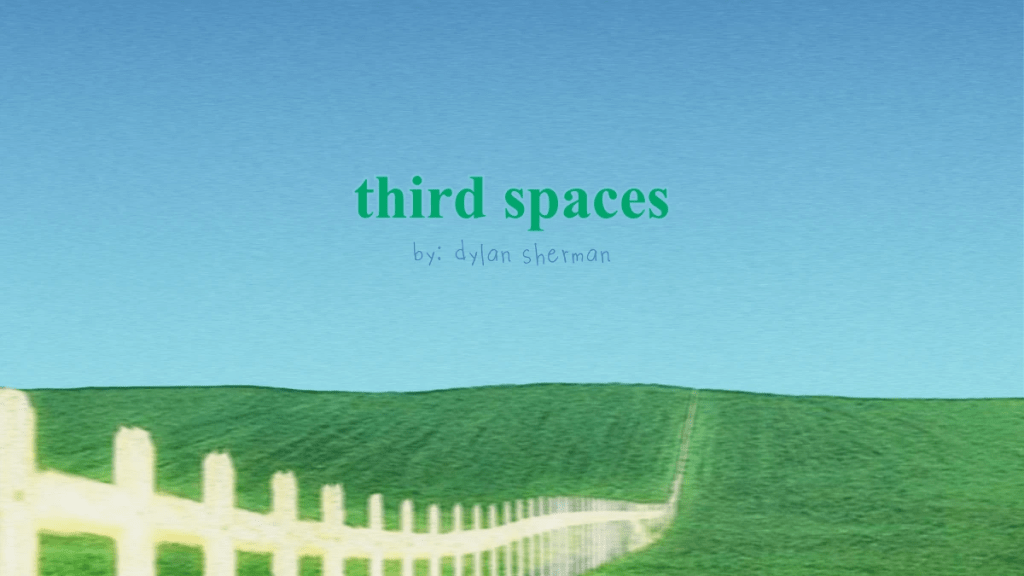
Maeve’s going to kill herself if she’s not the star of her school play. Aidan’s being sent to a behavioral boarding school. Wes is getting his GED. Naomi’s the president of the LGBTQ+ club. Genevieve’s going on a hunger strike. None of them want to go home.
When a child does not feel safe at home, and does not feel safe at school, they tend to seek out a third space, such as an extra curricular activity. Third Spaces explores the importance of third spaces for children, as well as the potential ramifications of cuts to NEA and DOE funding.
CAST: Olivia Haney, Anaïs Juillet, Sarah Liu, Wesley Memery, and John Ricotta
Daphne, the Cynic
Producer
Daphne, the Cynic is in development. We previewed two songs at 54 below November 2025, held our first workshop June 13, 2026 and hope to bring it to The Fringe (Edinburgh) Summer of 2027.
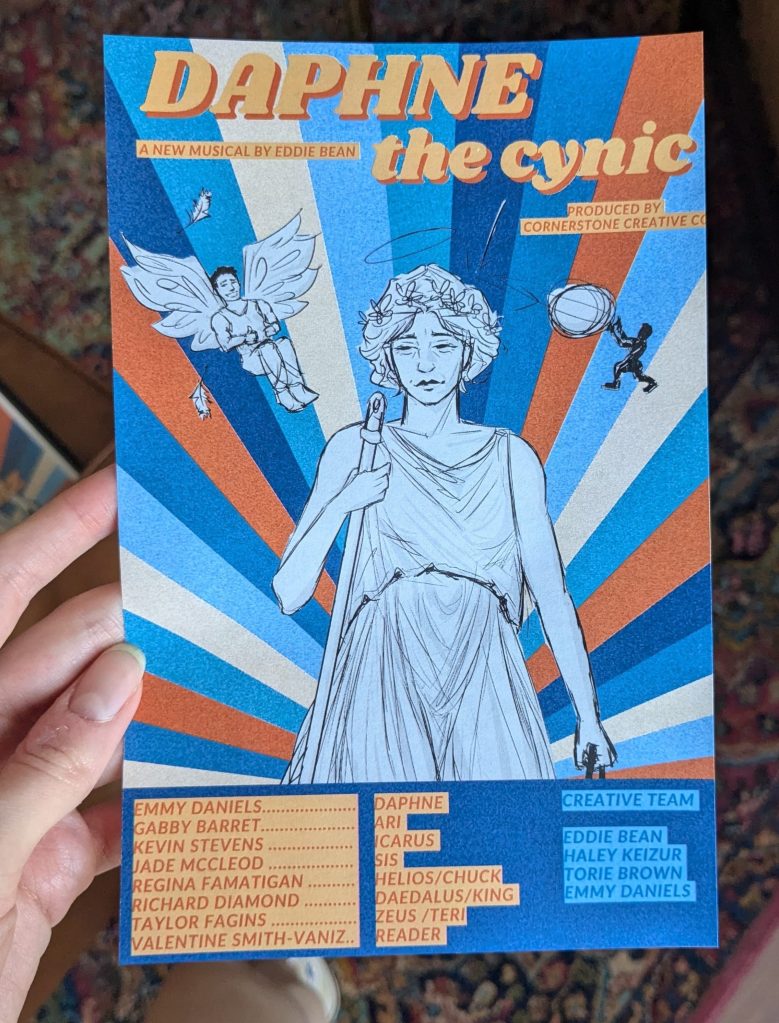
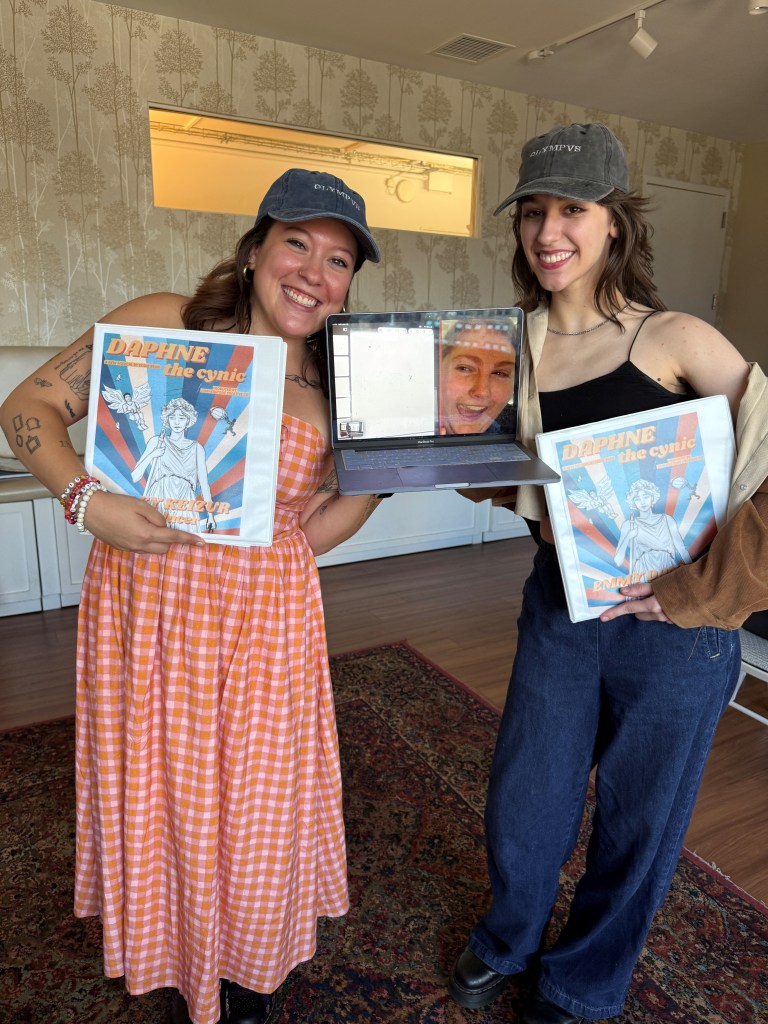
Daphne the Cynic is about labor, consciousness, and the search for meaning within broken systems. It is absurdist. It is also a musical comedy about vomit.
In this world, gods, kings, and bureaucracies maintain social order by convincing mortals that their suffering is predetermined. The workers of the Vomitorium have accepted their roles because they believe they must.
At the beginning of the musical, Daphne survives through cynicism, routine, and emotional detachment. Her sudden awareness of her own consciousness — “having a thought” — disrupts her understanding of herself and the world around her. If her life is not entirely predetermined by the gods, then why has she accepted it for so long? Why does she help maintain a system that exploits both herself and others?
Icarus enters the story after surviving his legendary fall from the sky. Rather than becoming enlightened or heroic, he becomes fascinated by the absurdity of survival itself. Sisyphus, aka “Sis,” enters the story after they uncannily lose control of their rock and it crashes into the Vomitorium. Both Icarus’s and Sis’s philosophies reflect the “absurd hero” described by Albert Camus: a person who confronts a meaningless or indifferent universe without surrendering to despair, false hope, or illusion.
Together, with Daphne, they begin to understand that while existence may not contain inherent meaning, human beings can still create meaning through care, solidarity, humor, work, and community.

